When Your Qualified Intermediary Goes Bankrupt: The LandAmerica Story
I have been facilitating 1031 exchanges since 1990. In that time, I have seen the industry grow from a niche specialty into a mainstream tax planning tool used by investors of every size, from a family selling a single rental property to institutions repositioning entire portfolios. For the most part, that growth has been good.
But I have also seen the worst of what happens when the wrong people hold other people's money. This is one of those stories.
A Client Lost
Around 2004, I lost a client to LandAmerica 1031 Exchange Services, Inc. The reasons were straightforward. LandAmerica charged around $350 per exchange — well below what most qualified intermediaries could sustain. And their parent company, LandAmerica Financial Group, Inc., one of the largest title insurance holding companies in the country, stood behind them with what appeared to be an ironclad corporate guarantee.
It was a compelling pitch. A national brand, a rock-bottom fee, and the implied security of a Fortune 500 parent. I understood why the client left. I did not blame them.
But the fee should have raised a question nobody was asking: How does a qualified intermediary make money at $350 per exchange?
The Business Model Nobody Questioned
The answer was the float.
When a 1031 exchange closes, the qualified intermediary holds the exchange proceeds — sometimes for days, sometimes for the full 180-day exchange period. Those funds generate interest. In a conservative model, the QI places those funds in a qualified escrow or qualified trust account, earns a modest return, and the interest belongs to the client. The QI earns its fee from the fee.
LandAmerica did not follow the conservative model. Instead of charging a sustainable fee for their services, they kept the interest spread. They paid exchangors passbook savings rates — a fraction of a percent — while investing the funds for higher returns. The difference between what they earned and what they paid the client was their real revenue stream. The low exchange fee was a loss leader designed to attract volume. The more money they held, the more they made on the spread.
This is not, in itself, illegal. The exchange agreement language — which clients signed — gave LandAmerica "sole and exclusive possession, dominion, control and use" of the exchange funds. That language would later prove devastating.
But the model created a structural incentive that should concern anyone who understands risk: the QI's profitability depended on taking risk with other people's money.
As the saying goes: pigs get fat, hogs get slaughtered.
Auction-Rate Securities: A Ticking Clock
LandAmerica invested a substantial portion of client exchange funds in auction-rate securities — specifically, bonds backed by federally guaranteed student loans. On paper, these instruments appeared safe. They carried high credit ratings, were backed by the federal government, and offered better yields than Treasury bills or money market funds.
The catch was liquidity. Auction-rate securities are long-term bonds — often 30-year maturities — that are made liquid through periodic auctions, typically held every 7, 28, or 35 days. At each auction, investors who wanted their money back could sell to new buyers. The auctions had always succeeded. Until they didn't.
In early 2008, as the credit crisis deepened, the auction houses stopped conducting auctions. Without auctions, there were no buyers. And without buyers, the bonds could not be sold. Overnight, what had been treated as cash equivalents became illiquid 30-year instruments.
LandAmerica's exchange funds were trapped.
The Unraveling
When clients needed their funds to close on replacement properties — as 1031 exchangors must, within strict IRS deadlines — LandAmerica could not deliver. The money was locked in bonds that could not be sold.
To keep operating, LandAmerica began using newer clients' exchange deposits to fund older clients' closings. Incoming money from new exchanges was used to satisfy obligations from prior exchanges. This is, by definition, a Ponzi-like structure — whether or not anyone intended it as such.
It could not last.
Thanksgiving Week, 2008
On Wednesday, November 26, 2008 — the day before Thanksgiving — LandAmerica Financial Group, Inc. and LandAmerica 1031 Exchange Services, Inc. filed companion Chapter 11 bankruptcy petitions in the United States Bankruptcy Court for the Eastern District of Virginia.
The timing was not accidental. A filing on the eve of a holiday weekend minimized immediate media coverage and gave the company a few days before the full scope became public.
All employees were terminated on a company-wide conference call. They were given ten minutes to gather their personal belongings and leave.
Approximately $420 million to $450 million in exchange funds from roughly 450 customers was frozen.
Every one of those customers was in the middle of an exchange. Every one of them had sold a relinquished property and was counting on those funds to close on replacement property within the 45-day identification window or the 180-day exchange deadline. Every one of those exchanges failed. The IRS deadlines do not stop for bankruptcy.
The Bankruptcy Ruling That Changed Everything
The critical question in the bankruptcy proceeding was straightforward: whose money was it?
The exchangors argued the funds were held in trust — that LandAmerica was merely a custodian and the money belonged to the clients, not the bankruptcy estate.
The bankruptcy court ruled otherwise. The exchange agreement language — the same language that gave LandAmerica "sole and exclusive possession, dominion, control and use" of the funds — meant exactly what it said. The court held that the funds were property of the bankruptcy estate, not held in trust for the clients.
But there was a critical distinction. Of the roughly 450 affected customers:
- Approximately 400 had their funds in commingled accounts. These exchangors were classified as general unsecured creditors — at the back of the line in bankruptcy, behind secured creditors and administrative claims. Their money was simply gone, absorbed into the estate.
- Approximately 50 had their funds in segregated accounts. For these clients, the court ruled that the funds were held in trust and were not property of the estate. They were protected.
The difference between losing everything and losing nothing came down to a single structural choice: whether the exchange funds were held in a separate, segregated account or pooled with everyone else's money.
Ann McLaren and the Farmer Couple
I want to tell you one story from inside the collapse, because the human cost of these events is too easily lost in legal analysis.
I had known Ann McLaren since around 1990, when she was working at Rainier Title. Ann later became a qualified intermediary at LandAmerica 1031 Exchange Services. She was good at what she did, and we had remained friends over the years.
Shortly after the bankruptcy filing, Ann came to me. She was desperate. She had a client — a farming couple from Missouri who had just sold their farm. It was their life savings. They had closed on the sale of their relinquished property just days before the bankruptcy filing, and the exchange funds were now frozen in the LandAmerica estate.
The couple was on the road, driving to Oregon to buy a storage facility as their replacement property. They did not yet know their money was gone. On the drive, the husband hit ice in Kansas and was in an accident.
I did what I could. I connected them with a litigator in Southern California who specialized in Ponzi scheme recovery. But there was no quick fix. Their life savings sat in a bankruptcy estate for years.
Ann McLaren went on to work with me at Olympic Exchange Accommodators. We were both Christians, and we held to living with Christian values — we trusted the morals and ethics of each other. Ann was also a real estate agent in Thurston County, and she knew every agent in the area. She is a significant reason we built the business we did in that part of the state.
Ann died very suddenly in the autumn of 2023. Her loss was shocking, and I miss her still. But the lesson she carried from LandAmerica — the lesson we both carried — was the same one I am trying to pass on to you now: the choice of qualified intermediary is not a commodity decision.
The Aftermath
The LandAmerica bankruptcy proceeding dragged on for years. Here is what ultimately happened:
Fidelity National Financial had signed a purchase and sale agreement to acquire LandAmerica's 1031 exchange division before the bankruptcy. During due diligence, Fidelity discovered the depth of the problems and backed out of the deal. That withdrawal accelerated the collapse.
IRS Relief: The Internal Revenue Service issued Revenue Procedure 2010-14, providing a safe harbor for reporting the failed exchanges. Because the exchangors could not meet the 45-day or 180-day deadlines — through no fault of their own — every exchange failed, and the deferred gain became taxable.
Final Distribution (~2013): After approximately five years of litigation, the commingled-account clients recovered approximately 100% of their principal. That sounds like a happy ending. It was not. After federal and state taxes on the gains they could no longer defer, legal fees, lost interest, and the opportunity cost of having their capital frozen for half a decade, the net recovery was approximately 40 cents on the dollar.
The segregated-account clients recovered their funds relatively quickly and in full.
LandAmerica Was Not Alone
It is important to note that LandAmerica was not an isolated incident. In 2007, just a year before the LandAmerica collapse, two other qualified intermediaries failed:
- 1031 Tax Group (Richmond, Virginia) — collapsed owing approximately $200 million to 850 exchangors
- Southwest Exchange — failed under similar circumstances
All three followed variations of the same business model: low or no fees, revenue from the interest spread, and investment of exchange funds in instruments that carried more risk than the clients understood.
The Lessons
The LandAmerica collapse teaches several lessons that every 1031 exchangor should understand before selecting a qualified intermediary:
1. If the Fee Seems Too Low, Ask Where the Money Comes From
A qualified intermediary that charges $350 — or nothing — is not running a charity. They are making money somewhere, and the most likely source is the interest on your exchange funds. That means your money is being invested, and you are bearing the risk of those investments without sharing in the reward. Ask the question. If you don't like the answer, find a different QI.
2. "Qualified Escrow" and "Qualified Trust" Are Not Optional Concepts
The Treasury Regulations under Section 1031 identify specific safe harbors for holding exchange funds: qualified escrow accounts and qualified trust accounts. These are not marketing terms. They are legally defined structures that provide meaningful protection. If your QI holds funds in a general operating account or a commingled pool, your money is at risk in the event of the QI's insolvency.
3. Segregated Accounts Save Lives
The 50 LandAmerica clients who had segregated accounts recovered their funds. The 400 who did not were general unsecured creditors. Insist on a segregated account — ideally a qualified escrow or qualified trust held at an FDIC-insured institution in your name and the QI's name, so the funds cannot be commingled or redirected.
4. Corporate Guarantees Are Worth the Paper They're Printed On — Until They Aren't
LandAmerica Financial Group guaranteed the obligations of LandAmerica 1031 Exchange Services. Both entities filed Chapter 11 on the same day. The parent company guarantee was worthless from the moment it was needed most. Do not rely on a corporate guarantee as a substitute for structural protections.
5. FDIC Insurance Matters
Exchange funds held in FDIC-insured accounts at qualified banking institutions receive federal deposit insurance protection — up to applicable limits. This is a real, structural protection that exists independently of the QI's financial health. Your QI should be able to tell you exactly where your funds are held and confirm FDIC coverage.
6. The Interest Should Be Yours
If your QI is keeping the interest on your exchange funds, that is your money paying for a risk you did not agree to take. A conservative QI charges a fair fee for its services and lets the client keep the interest earned on their own funds. This eliminates the incentive to chase yield with client money.
7. Institutional Memory Matters
I have been in this business since 1990. I lived through the LandAmerica collapse. I knew the people involved. I saw what happened to the farmer couple from Missouri and hundreds of others like them. That experience shapes every decision I make about how exchange funds are held, where they are deposited, and what protections are in place.
When you choose a qualified intermediary, you are not buying a commodity service. You are trusting someone with funds that may represent your life savings, your retirement, your family's financial future. Choose someone who has seen what can go wrong — and built their practice to make sure it doesn't.
How Olympic Exchange Accommodators Does It Differently
Every lesson from the LandAmerica collapse is built into the way we operate:
- Qualified escrow accounts held at FDIC-insured banking institutions
- Dual safe harbor compliance under both the qualified escrow and qualified trust provisions of Treasury Regulation § 1.1031(k)-1(g)(3)
- Segregated accounts — your funds are never commingled with other clients' funds or with our operating capital
- You keep the interest earned on your exchange funds — we do not use the float as a revenue source
- FDIC insurance coverage on deposited exchange funds
- Fidelity bond coverage providing an additional layer of protection
These are not marketing bullet points. They are structural protections that exist because of what happened in 2008 — and because someone who was there is determined that it never happens to our clients.
To learn more about how Olympic Exchange protects your exchange funds — including the Qualified Escrow structure at Columbia Bank, the dual-signature requirement, and the Washington statute that mandates these protections — visit our Safety for Your Money page or call us at 253.512.1031.
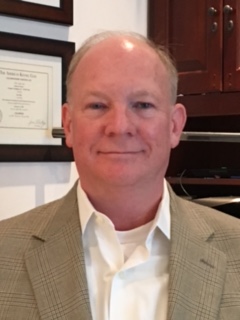
Jeff Helsdon is a Certified Exchange Specialist® who has been facilitating tax-deferred like-kind exchanges — forward, reverse, and improvement — since 1990. He is the principal of Olympic Exchange Accommodators in Tacoma, Washington, serving the Puget Sound region and Pierce County.
This article is dedicated to the memory of Ann McLaren — colleague, friend, and someone who understood that doing this work the right way is the only way to do it.
Disclaimer: This article is for informational purposes only and does not constitute legal, tax, or financial advice. The events described are based on publicly available court records, IRS guidance, and the author's personal experience. Always consult your own attorney, CPA, and financial advisor before making decisions about your 1031 exchange.